


.png)
As members of the AJKA-I, Bucks County Karate School teaches traditional JKA Shotokan Karate. We offer classes for adults and children ages 5 and up. Parents and their children ages 8 and up have the opportunity to experience their karate journey together as they take class together. Our Dragon Warriorz classes for ages 5 to 8 are based on Traditional JKA Shotokan Karate techniques, but are presented as developmentally appropriate tasks that will build the child’s self esteem.

Train together, grow together, and build confidence through traditional martial arts.


Programming: River Crossing YMCA Quakertown, PA
DRAGON WARRIORZ
5 to 8 yrs | Basic Shotokan Karate techniques mixed with interactive games and exercises to develop self-esteem and confidence.
Positive experience offering skills and tasks that can be accomplished with practice. Learn respect, humility, focus and discipline.
BEGINNER YOUTH AND ADULT
8+ | White-Yellow Belts
INTERMEDIATE YOUTH AND ADULT KARATE
8+ I Orange-Green Belts
ADVANCED YOUTH AND ADULT KARATE
8+ | Blue-Black Belts

Programming: River Crossing YMCA Doylestown, PA
DRAGON WARRIORZ
5 to 8 yrs | Basic Shotokan Karate techniques mixed with interactive games and exercises to develop self-esteem and confidence.
Positive experience offering skills and tasks that can be accomplished with practice. Learn respect, humility, focus and discipline.
BEGINNER YOUTH AND ADULT
8+ | White-Yellow Belts
INTERMEDIATE YOUTH AND ADULT KARATE
8+ I Orange-Green Belts
ADVANCED YOUTH AND ADULT KARATE
8+ | Blue-Black Belts

Upcoming Events

Shotokan Terms
-
Shotokan karate terms are primarily Japanese words used to describe the techniques, positions, and principles of the martial art
-
They help practitioners communicate movements and concepts consistently around the world

Stances (Dachi)
-
Heisoku-dachi – Feet together stance used for attention and transitions.
-
Shizen-tai – Natural relaxed stance used before movement.
-
Zenkutsu-dachi – Forward stance used for strong punches and forward power.
-
Kokutsu-dachi – Back stance used for defensive techniques and blocks.
-
Kiba-dachi – Horse stance used for strong side techniques and stability.

Punches (Zuki)
-
Oi-zuki – Lunge punch stepping forward with the same arm as the front leg.
-
Gyaku-zuki – Reverse punch using the rear hand for power.
-
Kizami-zuki – Jab punch using the lead hand.
-
Ura-zuki – Short upper punch used at close range.
-
Tate-zuki – Vertical punch with the fist turned upright.


Blocks (Uke)
-
Gedan-barai – Downward sweeping block protecting the lower body.
-
Age-uke – Rising block used to defend against attacks to the head.
-
Soto-uke – Outside block moving from outside to inside.
-
Uchi-uke – Inside block moving from inside to outside.
-
Shuto-uke – Knife-hand block performed with an open hand.


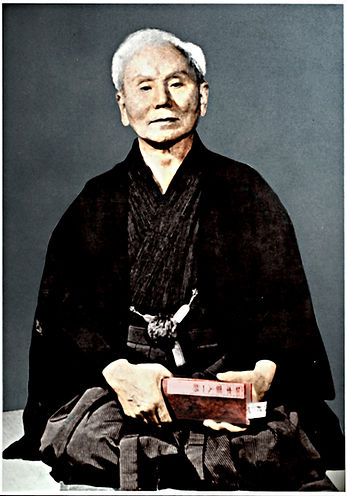
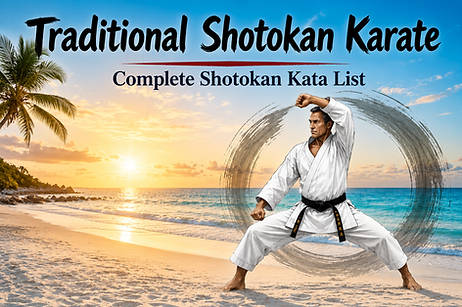
Shotokan Karate is a traditional Japanese martial art known for its powerful techniques, strong stances, and disciplined training. The style was introduced to Japan by Gichin Funakoshi, who helped bring Okinawan karate to mainland Japan in the early 1900s.
Training focuses on three core areas: kihon (basics), kata (forms), and kumite (sparring). These elements help students develop strength, focus, coordination, and self-discipline.




Get in Touch
Want to learn more about our programs or have questions or concerns? Please feel free to leave us a message. We would love to hear from you.
215-783-0206


Gichin Funakoshi’s 20 Precepts
Sensei Gichin Finakoshi was the founder of Shotokan Karate. He put forward these twenty precepts to help guide the development of his karate students:
-
Karate begins with courtesy and ends with courtesy.
-
There is no first attack in karate.
-
Karate is a great assistance to justice.
-
Know yourself first, and then others.
-
Spirit first, technique second.
-
Always be ready to release your mind.
-
Misfortune (accidents) always come out of idleness (negligence).
-
Do not think that karate training is only in the dojo.
-
It will take your entire life to learn karate; there is no limit.
-
Put your everyday living into karate and you will find myo (balance).
-
Karate is like hot water. If you do not give it heat constantly, it will again become cold water.
-
Do not think that you have to win. Rather, think that you do not have to lose.
-
Victory depends on your ability to distinguish vulnerable points from invulnerable ones.
-
Move according to your opponent.
-
Think of the hands and feet as swords.
-
When you leave home, think that you have numerous opponents waiting for you. If it your behavior that invites trouble from them.
-
Beginners must master low stance and posture; natural body posture for advanced.
-
Practicing a kata is one thing, and engaging in a real fight is another.
-
Do not forget 1) strength and weakness of power, 2) stretching and contraction of the body, and 3) slowness and speed of techniques (apply these correctly).
-
Always think and devise ways to live the precepts every day.